We use cookies — essential cookies only, to ensure this website functions correctly. We do not use tracking or advertising cookies. By continuing to use this site you accept our Privacy Policy.
EU Stock · B2B only · 27 member states · FDCM E-Commerce S.A. · Warsaw, Poland
EU Reg. 1333/2008 Compliant · pH Science · B2B from 25 kg
Food Preservatives Bulk — EU Stock with Science
Potassium sorbate, sodium benzoate, ascorbic acid, citric acid and more — from EU stock with CoA per batch. The only bulk preservative supplier page with interactive pH effectiveness charts, MIC data and a dose calculator.
🧪 7 products⚗️ pH charts included📊 MIC comparison🧮 Dose calculator🚛 DSV EU-27🧾 CoA per batch
How food preservatives actually work — mechanisms & pH dependency
All organic acid preservatives share a fundamental mechanism: they work in their undissociated (free acid) form, which is lipophilic enough to cross microbial cell membranes. Once inside, the acid dissociates in the near-neutral cytoplasm, lowering intracellular pH and disrupting enzyme activity. The organism expends energy trying to restore pH homeostasis, eventually dying from ATP depletion or metabolic collapse.
The fraction in the active acid form is governed by the Henderson-Hasselbalch equation:
Active fraction = 1 / (1 + 10(pH − pKa)) At pH = pKa: 50% active. At pH 1 unit below pKa: 91% active. At pH 1 unit above pKa: 9% active.
This is why pH control is inseparable from preservation strategy. Citric acid (E330) and malic acid (E296) serve a dual function: they provide flavour acidity AND activate the preservatives by lowering pH into the effective range. A product at pH 4.0 with 300 mg/kg potassium sorbate has 85% active sorbic acid (255 mg/kg active). The same product reformulated to pH 5.5 has only 17% active (51 mg/kg) — well below effective concentrations.
The four antimicrobial mechanisms
Undissociated acid theory — visualised
As pH rises, the preservative converts from active acid (membrane-penetrating) to inactive ionic salt form. The interactive chart below shows this transition for each E-number.
Key threshold: Below 50% active form, preservative concentration must be doubled to maintain MIC — often exceeding legal limits.
Active form % by preservative at pH 3–8
Potassium Sorbate (E202)
85%
Sodium Benzoate (E211)
61%
Ascorbic Acid (E300)
60%
Citric Acid (E330)
12%
Malic Acid (E296)
20%
Shown at pH 4.0 — use slider in chart below to explore
⚡
Intracellular pH Drop
Undissociated acid crosses membrane, dissociates inside cell, lowers cytoplasmic pH from ~7.0 to <5.0. Disrupts enzyme function and protein structure.
Primary mechanism: E202, E211
🔋
ATP Depletion
Cell expends energy (ATP) pumping out excess H⁺ ions to restore pH. Energy depletion halts growth and reproduction even before cell death.
All organic acid preservatives
🛡️
Oxygen Scavenging
Ascorbic acid (E300) reacts with dissolved O₂ before microbes or oxidative reactions can use it. Reduces aerobic microbial growth and prevents oxidative spoilage.
Primary mechanism: E300
🔗
Metal Chelation
Citrate (E330, E331) binds Fe²⁺, Cu²⁺, Mn²⁺ ions that microbes need for enzyme function. Starves pathogens of essential metals and prevents Fenton reactions.
Primary mechanism: E330, E331
Interactive chart
pH effectiveness chart — active form % vs pH
The chart shows what percentage of each preservative is in its active (undissociated acid) form at any given pH. Drag the slider to see how reformulating your product's pH changes preservative activity. Lower is almost always better for preservation efficacy.
Active fraction (%) of each preservative vs pH — drag slider to explore
A comprehensive side-by-side comparison of all FDCM food preservatives. Scroll horizontally on mobile.
Parameter
Pot. Sorbate
Sod. Benzoate
Ascorbic Acid
Citric Acid
Malic Acid
Tartaric Acid
Trisodium Citrate
E-Number
E202
E211
E300
E330
E296
E334
E331
pKa (acid form)
4.76
4.20
4.17
3.13 / 4.76 / 6.40
3.40
2.99 / 4.34
6.40
Effective pH max
≤6.5
≤4.5
≤5.5
≤5.0
≤5.0
≤4.5
≤7.0
Primary target
Yeast & Mould
Bacteria, Yeast
O₂ / oxidation
pH control
pH control
pH control
Buffer / chelate
Bacteria (gram-)
Medium
High
Low
Synergist
Synergist
Synergist
Chelator
Yeast
High
High
Low
Synergist
Synergist
Low
—
Mould
High
Medium
Low
Synergist
Synergist
Low
—
Heat stability
Good
Good
Good
Excellent
Excellent
Excellent
Excellent
Max. bev. (mg/kg)
300
150
QS
QS
QS
QS
QS
Max. bakery
2000
—
QS
QS
QS
QS
QS
EU legal status
1333/2008
1333/2008
1333/2008
1333/2008
1333/2008
1333/2008
1333/2008
Price (€/25 kg)
19.69
12.79
20.11
8.67
14.83
13.58
9.14
Efficacy data
MIC comparison — minimum inhibitory concentrations by pathogen
MIC (Minimum Inhibitory Concentration) is the lowest concentration of a preservative that prevents visible microbial growth under standard conditions (pH 4.0, 25°C, 24h). Lower MIC = more potent against that organism. Note: MIC values are at pH 4.0 — efficacy drops sharply at higher pH.
E. coli (gram-)
S. aureus (gram+)
Aspergillus (mould)
Saccharomyces (yeast)
MIC values (mg/L) at pH 4.0, 25°C. Lower = more effective. Source: literature values, approx. for guidance. Actual MIC varies with formulation, temperature, inoculum size and growth medium.
Key insight from MIC data: Citric acid has surprisingly low MIC against E. coli (500 mg/L) — comparable to sodium benzoate (1,000 mg/L) at equimolar concentration. This makes citric acid not just a synergist but an active antimicrobial agent in its own right at low pH, especially in beverages where it is present at 1,000–3,000 mg/L.
Formulation tool
Preservative dose calculator
Enter your product's pH, target microorganism and maximum permitted dose. The calculator recommends the optimal preservative approach based on pH-activity science and EU 1333/2008 limits.
Application guide
Preservative application heatmap — which product for which food?
Colour-coded by typical usage intensity across major food categories. Based on EU 1333/2008 permitted uses and industry practice.
Preservative
Beverages
Soft drinks
Bakery
Cheese
Sauces
Wine
Dried fruit
E202 Pot. Sorbate
Common
Primary
Essential
Primary
Common
Common
Primary
E211 Sod. Benzoate
Primary
Essential
—
—
Primary
—
—
E300 Ascorbic
Primary
Common
Common
Optional
Common
Primary
Primary
E330 Citric Acid
Essential
Essential
Primary
Common
Essential
Common
Common
E296 Malic Acid
Primary
Primary
Optional
—
Common
Optional
Optional
E334 Tartaric
Common
Common
Rare
—
Optional
Essential
Rare
E331 Trisodium
Common
Common
Common
Primary
Common
Optional
Optional
Legend: EssentialPrimaryCommonOptionalRareNot used
Regulatory reference
EU legal limits — EU Regulation 1333/2008 (mg/kg unless stated)
QS = quantum satis (no upper limit, use as needed). — = not permitted in this category. All limits expressed as the acid form. Verify the current Annex II of EU Reg. 1333/2008 for your specific food category before production.
Food Category
E202
E211
E300
E330
E296
E334
E331
Soft drinks / beverages
300
150
QS
QS
QS
QS
QS
Fruit juices
—
—
QS
QS
QS
QS
QS
Jams & marmalades
1000
500
QS
QS
QS
QS
QS
Bakery & pastry
2000
—
QS
QS
QS
QS
QS
Pre-packed bread
2000
—
QS
QS
QS
QS
QS
Processed cheese
1000
—
QS
QS
QS
QS
QS
Dairy desserts
300
—
QS
QS
QS
QS
QS
Dressings & sauces
1000
500
QS
QS
QS
QS
QS
Wine
200
—
QS
QS
QS
QS
QS
Dried fruits
1000
—
QS
QS
QS
QS
QS
Fish products
200
—
QS
QS
QS
QS
QS
Meat products
—
—
QS
QS
QS
QS
QS
Source: EU Regulation (EC) No 1333/2008, Annex II. For authoritative current limits, always consult the official EUR-Lex text. FDCM provides EU Reg. 1333/2008 conformity statement with every order.
Full catalogue
All 7 FDCM food preservatives — EU stock
All products available from 25 kg, CoA per batch as standard, DSV delivery to all 27 EU member states in 3–7 business days.
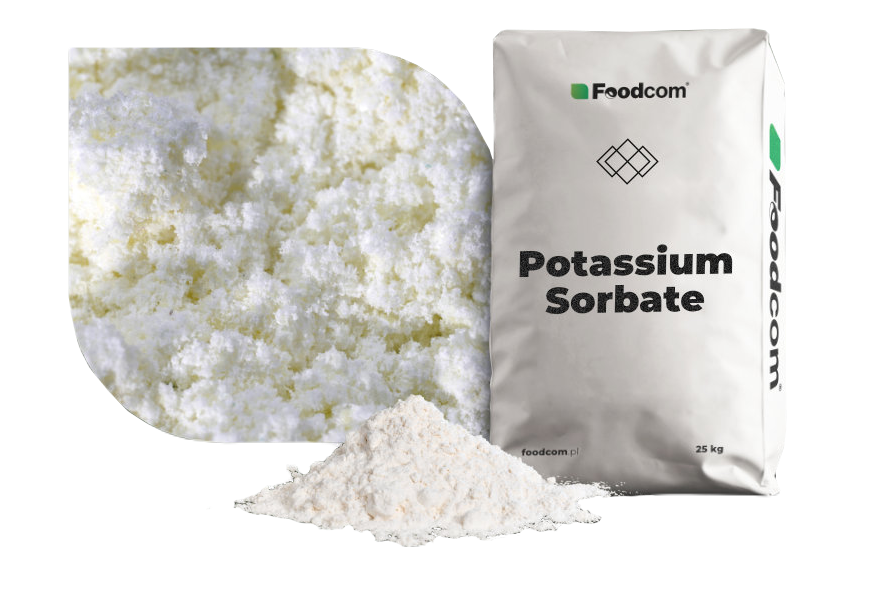
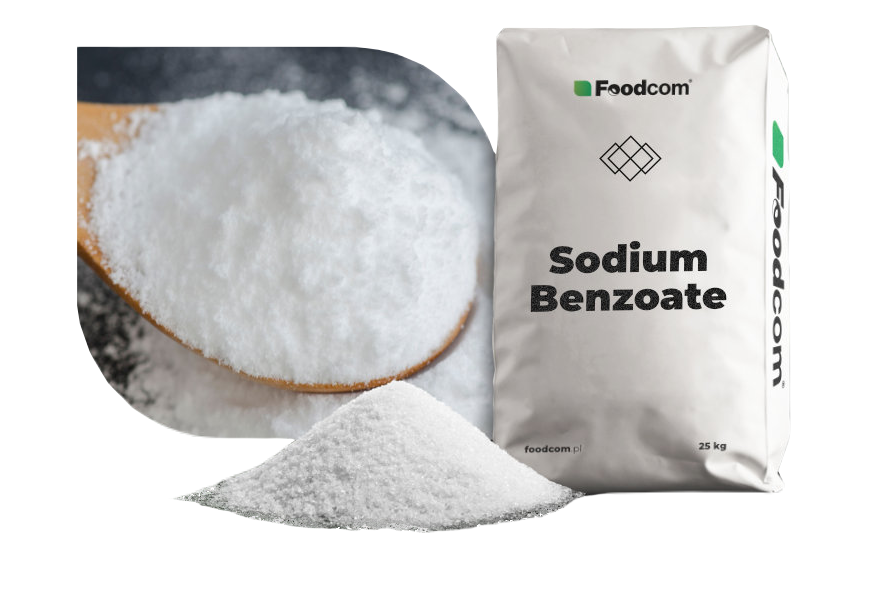
The key difference is pH range and microbial spectrum. Potassium sorbate (E202, pKa 4.76) is effective up to pH 6.5 and primarily targets yeast and moulds. Sodium benzoate (E211, pKa 4.20) requires pH below 4.5 to be effective and covers bacteria and yeast. At pH 5.0: sorbate is ~37% active; benzoate is only ~14% active. In products above pH 4.5, potassium sorbate is the only practical organic acid preservative. They are often combined in beverages at pH 3.5–4.0 for broad-spectrum protection.
Organic acid preservatives work in their undissociated (free acid) form. The Henderson-Hasselbalch equation governs the equilibrium: active% = 100 / (1 + 10^(pH − pKa)). As pH rises above the pKa, the preservative converts to its ionic salt form, which cannot penetrate microbial cell membranes. At pH 6.0, potassium sorbate is only 5.7% active. This is why acidulants (citric acid, malic acid) serve a dual function: flavour enhancement AND activation of preservatives by lowering pH.
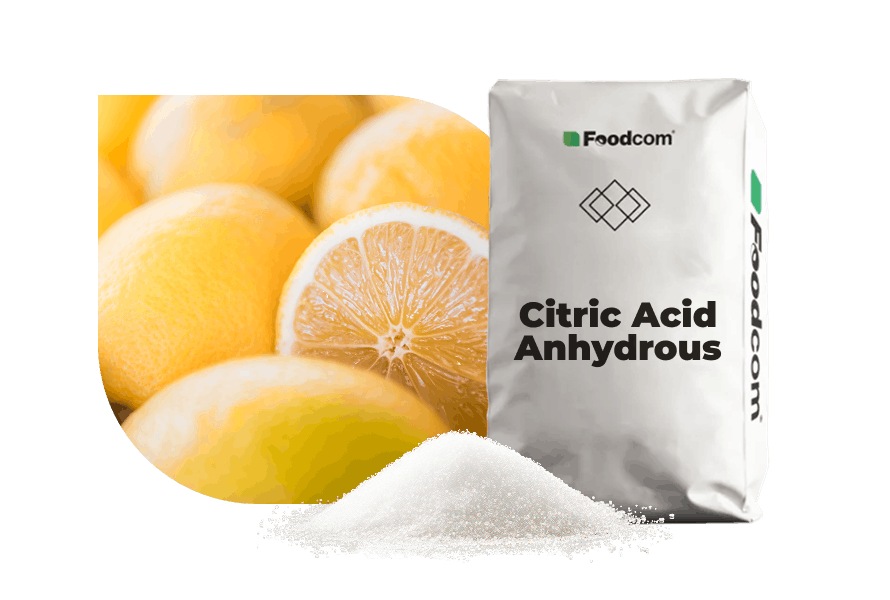
Citric acid (E330) provides three synergistic mechanisms: (1) pH reduction — lowers product pH into the effective range of sorbate and benzoate; (2) chelation — binds metal ions (Fe²⁺, Cu²⁺) that catalyse microbial enzyme activity and oxidative reactions; (3) direct antimicrobial activity — citrate ions disrupt gram-negative bacterial outer membranes at low pH. A standard soft drink formulation uses citric acid (pH to 3.2–3.5) + potassium sorbate 300 mg/kg + ascorbic acid 50 mg/kg — three-way synergy.
Under EU Regulation 1333/2008: soft drinks and flavoured waters: 300 mg/kg expressed as sorbic acid; fruit juices: not permitted as additive; wines and grape juice: 200 mg/kg; bakery products: 2,000 mg/kg; processed cheese: 1,000 mg/kg; jams and marmalades: 1,000 mg/kg. Note: labels must declare 'sorbic acid' or 'potassium sorbate' with the E202 number.
Use the Dose Calculator above or apply the formula: Required dose = Target MIC × (1 + 10^(pH − pKa)) × Safety factor (2–3×). Example: targeting Saccharomyces cerevisiae with potassium sorbate at pH 4.5: MIC ~300 mg/L active sorbic acid × (1 + 10^(4.5−4.76)) × 2.5 safety = approximately 650 mg/L total potassium sorbate, well within the 2,000 mg/kg legal limit for most categories.
Yes, and they are synergistic. The combination covers both bacteria (benzoate strength) and mould/yeast (sorbate strength), allowing lower individual doses while maintaining broad-spectrum efficacy. However, EU Regulation 1333/2008 specifies combined limits for sorbate + benzoate in some categories (e.g. beverages: the sum expressed as acids must not exceed the individual permitted levels). Always verify the applicable combined limit for your specific food category.
Quantum satis (QS) means 'as much as necessary' — the additive can be used at any concentration provided it achieves the intended technological purpose and does not mislead consumers. QS applies to most acidulants (E330, E300, E296, E334) across most food categories. Specific mg/kg limits apply where risk assessment determined a maximum safe level — notably E202 (up to 2,000 mg/kg bakery) and E211 (150 mg/kg beverages). Always consult the actual Annex II of EU Regulation 1333/2008 for your specific product category and additive combination.
Standard with every delivery: CoA per batch (assay/purity to EU Reg. 231/2012, heavy metals — Pb, Cd, Hg, As, microbiological — TPC, coliforms, Salmonella, Listeria, loss on drying). On request at no charge: TDS, EU Reg. 1333/2008 conformity statement, REACH declaration, allergen declaration (all products allergen-free), halal certificate, non-GMO statement, country of origin, FSSC 22000/BRC supply chain compliance.
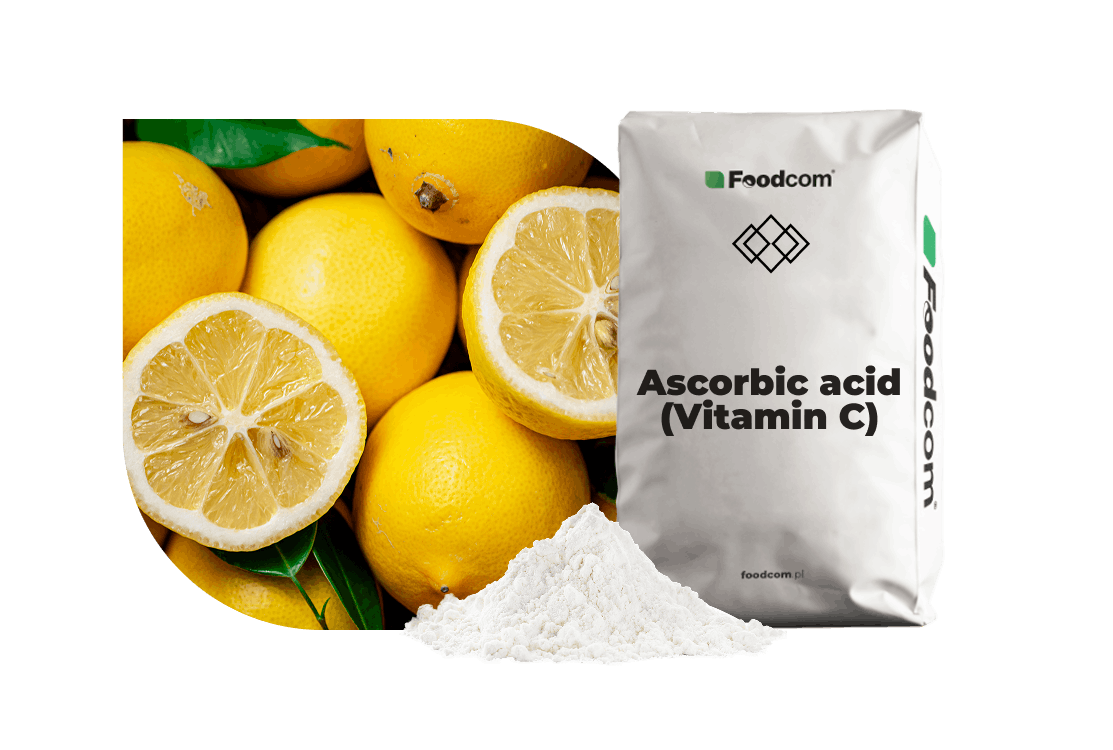
Ascorbic acid (E300) is dual-classified: as a vitamin (Vitamin C) in nutritional context and as an antioxidant food additive in technological context. Its preservation mechanism is different from sorbate and benzoate — it is an oxygen scavenger, not an antimicrobial agent. It reacts preferentially with dissolved oxygen, preventing oxidative degradation of fats, colours, and flavours, and inhibiting oxidative browning. In beverages it also synergises with sorbate and benzoate by reducing oxidative stress that weakens preservative activity.
Chelation is the binding of metal ions (Fe²⁺, Fe³⁺, Cu²⁺, Mn²⁺) by a chelating agent into stable ring structures. Citric acid (E330) and trisodium citrate (E331) are effective chelators because their three carboxylate groups can coordinate with metal ions simultaneously. This matters for preservation because free metal ions catalyse Fenton-type reactions generating hydroxyl radicals that degrade preservatives, accelerate lipid oxidation, and stimulate microbial enzyme activity. Removing free metals with citrate effectively extends preservative action and product shelf life.
Order & Enquiries
Buy food preservatives from EU stock
We respond to all B2B enquiries within 4 business hours
7 products, from 25 kg each, CoA per batch. EU Regulation 1333/2008 compliant. DSV delivery to all 27 EU member states in 3–7 business days. No framework contract.